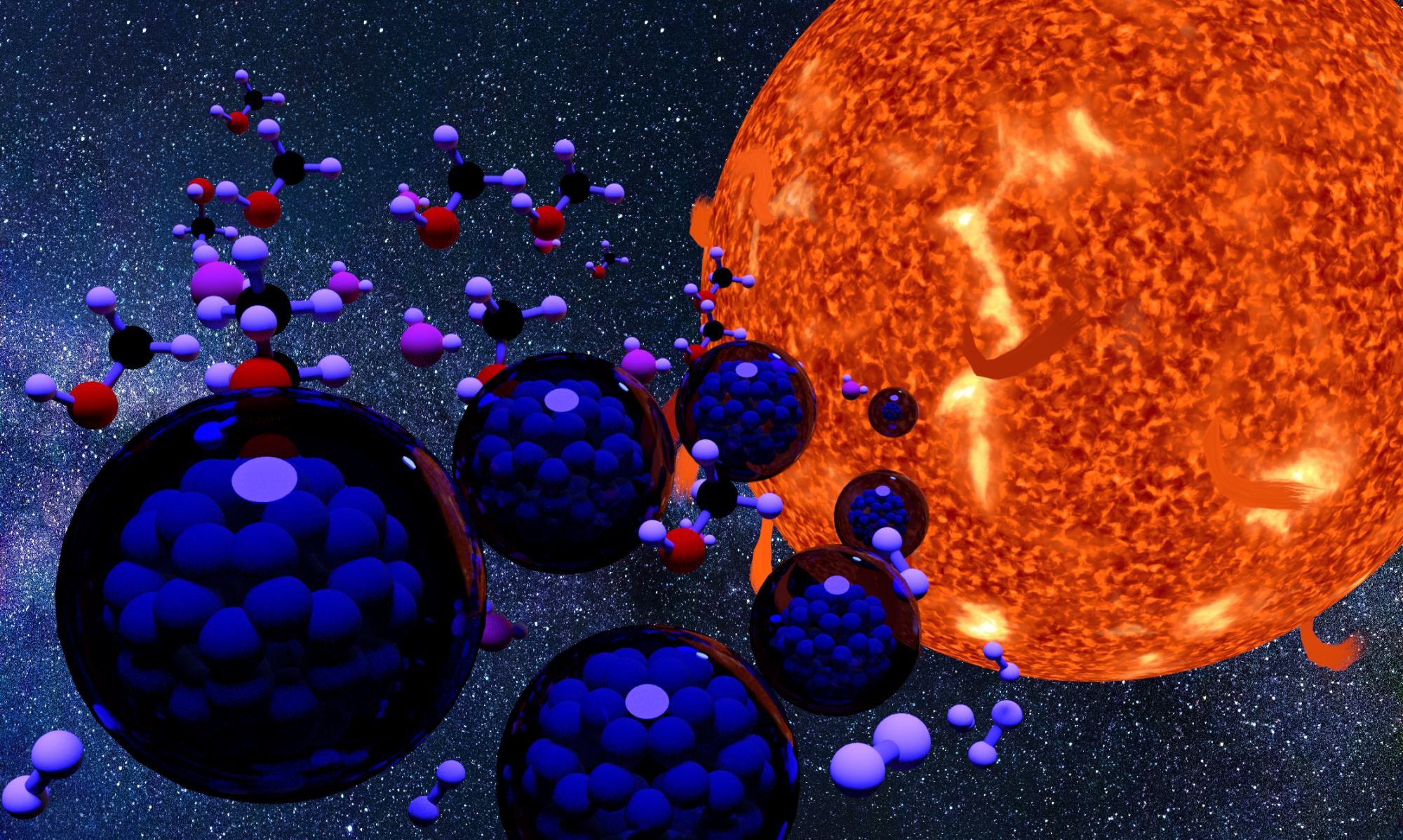

Achieving effective reduction in greenhouse gas emissions necessitates both preventing resource depletion and offering sustainable solutions to meet the increasing demand for energy.The technology developed in the NEXPECH2 project effectively addresses the above-mentioned challenges by using solar energy to convert water to green hydrogen (H2) under standard atmospheric temperature and pressure. Green hydrogen is a clean, sustainable chemical fuel that can be stored on a large scale for a long time and used to replace fossil fuels as a means of energy storage, transportation fuel, and feedstock. The NEXPECH2 ultimate goal is to deliver green H2 on a prototype lab-scale via development of a innovative photoelectrochemical (PEC) system for maximized solar light harvesting and efficient solar conversion to H2. The project will develop a low-cost compact device with the objective of reaching 10% solar-to-fuel efficiency and <10% degradation over 200 h operation.
The project is funded under the program of M-ERANET 2023 and involves teams from the “Institut de Chimie Physique (ICP), CNRS, UMR 8000, Université Paris-Saclay, France”, “SINTEF, Norway,” the company “MDES, MultiDesign Engineering AS, Norway”, the “University of Oviedo and Institut Català de Nanociència i Nanotecnologia (ICN2), Spain”
